
Empowering the Next Generation of Space Professionals
📅 23rd October 2026
📍In-person and remote (Global Access) | Space Park, Leicester
DiSC 2026 Overview
Diversity in Space Careers (DiSC) is a one-day conference promoting equality, diversity, and inclusion in the space sector. Through talks, panels, and workshops, it supports underrepresented groups and students to inspire the next generation of space professionals.
What To Expect
🎤 Keynote Speakers
Industry leaders sharing insights on diversity in space careers.
💬 Panel Discussions
Interactive talks on breaking barriers and building inclusive teams.
🤝 Networking
Connect with peers, mentors, and potential employers.
🎯 Workshops
Hands-on activities and skill-building sessions.
Meet Our Speakers
Learn from leading voices across industry, academia, and beyond.
Keynote Speakers
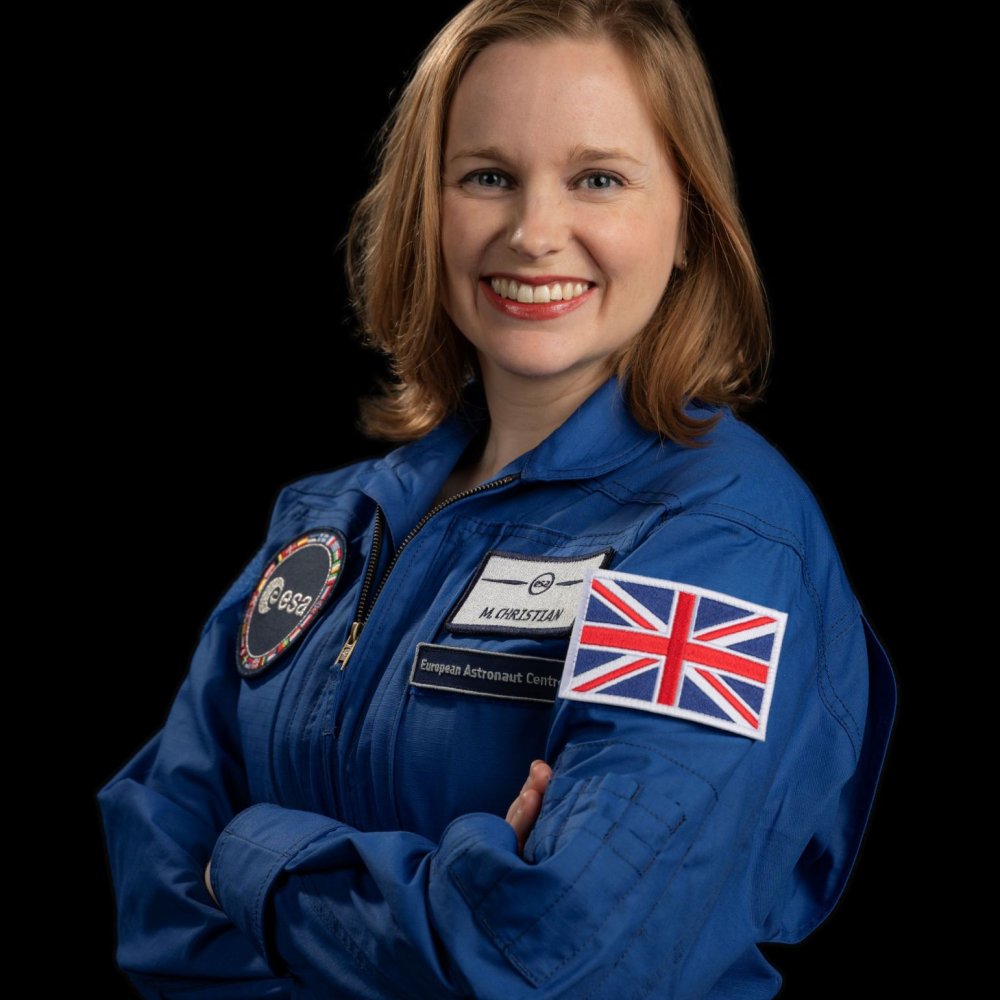
Dr Meganne Christian is a European Space Agency reserve astronaut and Beyond Earth Mission Manager at the Satellite Applications Catapult, having previously served as Senior Exploration Manager at the UK Space Agency.
She holds a PhD in Industrial Chemistry from the University of New South Wales. Between 2014 and 2023, she conducted materials science research at Italy’s National Research Council, including parabolic flight campaigns testing graphene for satellites.
Her experience includes overwintering in Antarctica as Concordia Station’s atmospheric physicist. In 2022, she was selected from 22,500 applicants as part of ESA’s first new astronaut class in 13 years.
Dr Meganne Christian will recount the experiences that led her to be selected as a member of the European Space Agency astronaut reserve, from materials science studies in microgravity to a year working at Concordia Station in Antarctica, one of the most remote places on Earth, also known as “White Mars”.
She will describe her experiences as a woman in STEM, the tough astronaut selection process and her hopes for the future, as well as the work she is doing on in-space manufacturing at the Satellite Applications Catapult.
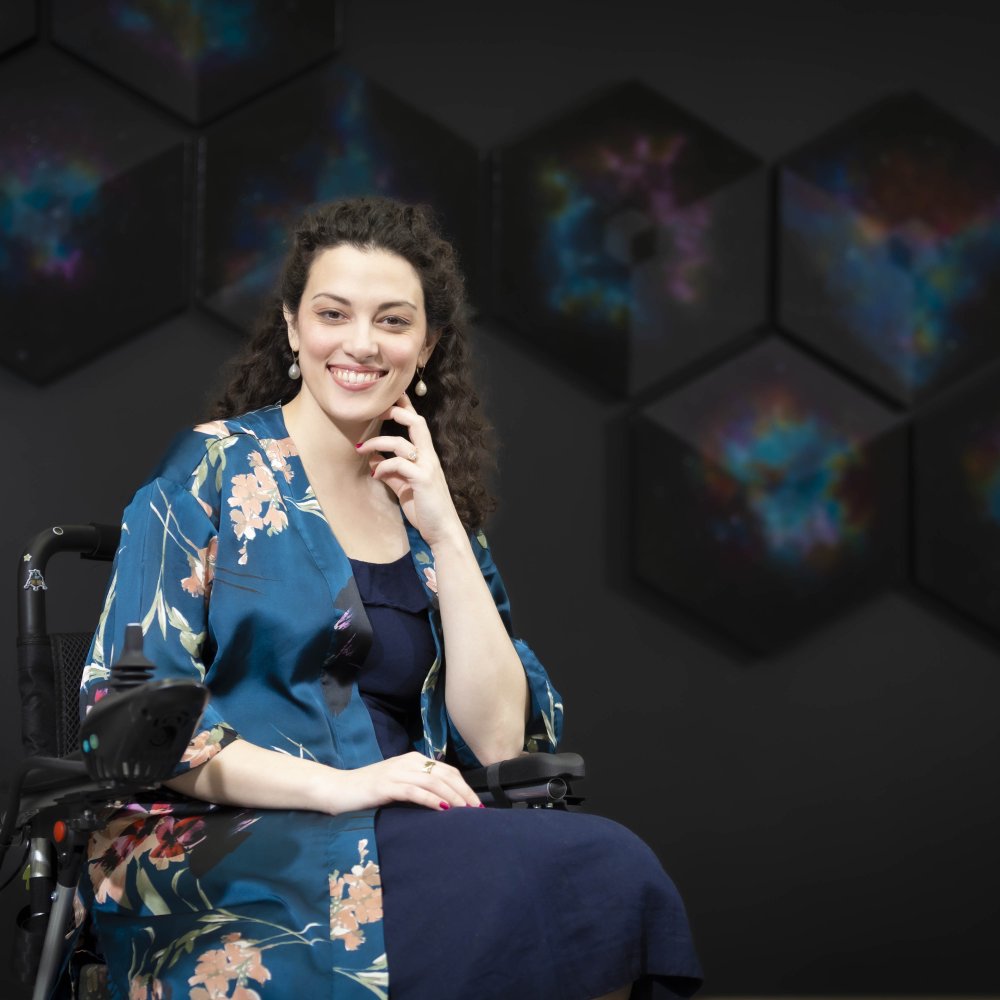
Dr Zoe Swann Baillie is a spaceflight neuroscientist and Postdoctoral Research Associate at the Leverhulme Centre for Humanity and Space, University of Leicester.
Trained in neuroscience, linguistics, biomedical engineering, and clinical research, her work explores how humans adapt to extreme environments and how future systems can better support wellbeing, autonomy, and participation.
Drawing on both her professional and lived experience of disability, Zoe’s research spans disability studies, ethics, human factors, informed consent, and personalised health monitoring.
She is particularly interested in what disability can teach us about trust, resilience, and designing environments in which diverse humans can flourish.
We often think of accessibility as removing barriers for a minority. Dr. Zoe Swann Baillie argues it is our greatest source of expertise. Drawing on disability studies, neuroscience, healthcare, and human-centred design, Dr Zoe Swann Baillie explores accessibility as a question of participation, trust, belonging, and human flourishing.
What makes a system genuinely accessible? Why do some forms of support empower while others feel like surveillance? And what can disability teach us about adaptation, resilience, and care? After all, we talk endlessly about risk in spaceflight. We hardly ever talk about joy. Yet joy, dignity, autonomy, community, and meaning are not luxuries. They are what make life worth participating in.
The future is not about creating perfect astronauts. It is about creating systems in which imperfect humans can flourish together.
Featured Speakers

Bethan is passionate about skills development, early careers and supporting access to the space industry for more than just engineers!
Her recent achievements include roles within the Space Skills Advisory Panel, and Advanced Manufacturing Equality Taskforce, delivering a world-first In-Orbit Servicing Graduate Scheme, and founding an HR Community for the UK Space Industry – ConstellHR.
Space can seem intimidating from the outside, especially if you don’t fit the ‘usual mould’. This talk will look at the difference between belonging and fitting in, why we need diverse perspectives, and some takeaways that can help you as you start to shape your career in space.
Kirankumar Tenginakai is a space enthusiast with an MSc in Astronautics and Space Engineering from Cranfield University.
He has experience developing high-reliability space hardware across the engineering lifecycle, from concept design through assembly, integration, testing (AIT), and in-orbit validation.
Kirankumar has contributed to two in-orbit space missions and worked on multiple space projects involving microfluidic space systems and additive manufacturing.
During his time at Cranfield, he was actively involved with CRANSEDS, contributing to the Mach-22 and European Rocket Challenge (EuRoC) programmes.
As a former UKSEDS Volunteer, he supported student rocketry and national space conference. He is passionate about hands-on engineering and inspiring the next generation of space professionals.

Dr Emily Jane Watkinson is the co-director of the MSc Space Science and Engineering programme at University of Leicester hosted within School of Physics and Astronomy.
She is a lecturer (research and teaching), and teaches on the MSc programme and the Undergraduate Physics programmes.
Her research expertise is in Space Nuclear Power Systems. Emily Jane is based at Space Park Leicester.
Dr Emily Jane Watkinson is the co-director of the MSc Space Science and Engineering programme at University of Leicester hosted within School of Physics and Astronomy.
She will be giving a talk about the 12-month MSc course explaining how it provides both scientists and engineers the knowledge, skills and, via a 6-month project, the experience to work in the Space Industry sector.
The programme is taught at Space Park Leicester and the main campus by experts working on real space projects.
Find out more at: https://le.ac.uk/courses/space-science-and-engineering-msc/2026
Dr Francesca Faedi is an astrophysicist whose career has evolved across science, business, innovation and policy.
After more than fifteen years in astrophysics, working internationally on exoplanets and gravitational-wave science, she now works at the University of Leicester and Space Park Leicester, connecting disciplines, sectors and ideas to create new research and innovation opportunities.
Her own non-linear career has shaped her interest in equality and representation, particularly how unconventional backgrounds and interdisciplinary careers are valued.
She believes the next generation will enter a space sector very different from today’s — and that its future will depend on people with the confidence to cross boundaries, challenge established pathways and create roles that may not yet exist.
Starting a career in the space sector can feel daunting, especially when you are unsure how your skills and experiences fit in.
This interactive workshop will help you recognise your strengths, identify the value you bring to a team, and build confidence in communicating your contribution.
Through practical reflection and activities, we will explore how to recognise transferable skills, navigate non-linear career paths, and advocate for yourself in professional spaces.
Whether you are a student, recent graduate or exploring a new direction, discover how your unique experiences and perspectives can help you find your place in the UK space sector.

With extensive international experience in the higher education sector, Ljiljana has a track record of leading strategic transformation across both research- and teaching-focused universities. She is a resolute output focused and supportive leader who empowers and inspires teams to achieve their full potential.
In addition to holding Head of School positions at different UK Universities during her academic career Ljiljana contributed towards over 20 research and consultancy projects relating to buildings, energy and people.
At the very heart of her research interest is energy management and modelling in built environment. She is currently Head of School of Engineering at University of Leicester.
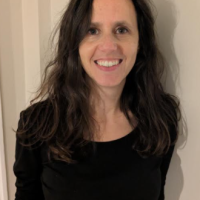
Anne Combes is Head of Connected Intelligence Supply Chain Operations at Airbus Defence and Space, leading cross-border teams across 13 European sites.
With over a decade of leadership in complex aerospace and defence procurement, she specialises in strategic supply chain management, risk mitigation, and end-to-end quality delivery for high-value engineering programmes.
She is a passionate advocate for workplace culture, driving team performance through inclusion, psychological safety, and mental health awareness initiatives.
What do defence space supply chains and a disco ball have in common?
Discover why bringing multi-faceted perspectives to the table isn’t just a DEI metric, but a mission-critical asset for building resilient, future-ready space networks.
To solve high-stakes defense challenges and build true operational resilience, you need reflections from every possible angle. In the ultra-complex world of defence space logistics, relying on single-track thinking is a major vulnerability.
Join us to explore how intersectional diversity, the rich overlap of unique human experiences, backgrounds, and neurodiversity, acts as our ultimate creative engine.
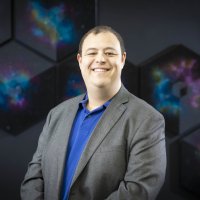
Josh is a passionate science communicator with over 20 years experience supporting people to engage with the Space Industry. He currently leads the Outreach and Executive Education programmes at Space Park Leicester alongside his Leadership of the British Association of Planetaria. Throughout his career he has had the opportunity to support space missions, astronomy outreach and contributed to national STEM programmes, finding ways to translate complex scientific concepts into accessible and inspiring content.
I will be giving a short presentation introducing Space Park Leicester and welcoming delegates to the venue.
 Panel: Finding Your Place in UK Space
What does it take to build a career in the UK space sector when you’re new to the country? Hear from international professionals as they share their journeys, from finding opportunities and building networks to navigating challenges and creating a sense of belonging. This panel will explore the experiences, connections and choices that shape careers in UK space.
Who Should Attend?
🎓 Students
Students pursuing degrees interested in space careers.
🌟 Recent Graduates
New professionals looking to break into the space industry.
🤝 DEI Practitioners
Professionals working on diversity and inclusion initiatives.
📚 Educators
Teachers and academics promoting STEM education.
Feedback From Previous Years
DiSC Highlights From Previous Years
DiSC Is Sponsored By



♿ Accessibility Commitment & Hardship Support
Our Accessiblity Commitment
DiSC 2026 is committed to full accessibility. Our venue is wheelchair accessible, all sessions include live captioning, and we offer both in-person and hybrid participation options to ensure everyone can be part of our community.
Hardship Fund
Get Your Tickets
Online Member Ticket
Join DiSC 2026 Online and hear from the speakers and panellists remotely.
In-Person Member Ticket
Join DiSC 2026 In-Person. Hear from the speakers, and panellists as well as network at Space Park, Leicester!
Online Non-Member Ticket
Join DiSC 2026 Online and hear from the speakers and panellists remotely.
In-Person Non-Member Ticket
Join DiSC 2026 In-Person. Hear from the speakers, and panellists as well as network at Space Park, Leicester!
Organised by UKSEDS Diversity & Advocacy Team
DiSC 2026 is proudly organised by the UKSEDS Diversity and Advocacy Team, dedicated to creating inclusive opportunities in space education and careers. Our mission is to ensure that the space industry reflects the diversity of our society and provides equal opportunities for all aspiring space professionals.
Getting to the Venue
Please note that limited parking is available at the venue and cannot be guaranteed, so using public transport is highly recommended.
Venue: The conference will be held at Space Park Leicester (92 Corporation Road, Space City, Leicester, LE4 5SP) — a world-leading hub for space research, technology, and innovation situated just north of Leicester city centre, located right next to the National Space Centre.
Nearest Transport:
Train: Leicester Railway Station is approximately 2 miles away, served by frequent East Midlands Railway and CrossCountry services.
From the station, you can easily take a short taxi or local bus connection. Bus: Local bus routes (such as the First Bus 54 or the Skylink Derby) stop nearby along Abbey Lane and Corporation Road, providing regular links to and from the city centre and Haymarket Bus Station.
- Driving & Parking: Space Park Leicester is easily accessible from arterial routes and the M1. Please note that limited parking is available at the venue and cannot be guaranteed, so using public transport is highly recommended.
Proud corporate partners with