by Robert Garner
on 4th November 2015
in Careers, Education, Events, Opportunities, Workshop
Potential entrepreneurs and technology start-ups in Exeter are being offered the chance to take part in a world-leading entrepreneurship course that could help their business idea to grow. SETsquared is set to hold another three-day entrepreneurship programme at the Exeter Science Park, with a number of free places available for eligible applicants, including funded places […]
by UKSEDS
on 19th January 2015
in Competition, Ecliptic, Education, Internal, News, Outreach, Press releases

The first ever contest allowing members of the public to NameExoWorlds begins its first round, offering the registered clubs and non-profit organisations, including UKSEDS, the chance to nominate their favourite systems to take through to the next rounds. The International Astronomical Union (IAU) is organising a worldwide contest to give popular names to selected exoplanets […]
by UKSEDS
on 15th January 2015
in Careers, Education, News, Opportunities
With record revenue and growth, outstripping all other sectors of the economy, the UK’s aerospace industry urgently needs well qualified graduates to spearhead its continued growth. That is why UK government and 10 major aerospace employers are jointly funding 500 MSc tuition fee bursaries, each worth up to £9.5k. In the words of Rt Hon Vince Cable, Secretary […]
by UKSEDS
on 14th September 2014
in Competition, Education, Events, International, Opportunities
Our sister organisation, SEDS-USA, have announced a second scholarship for students sponsored by founder of SEDS, Peter Diamandis. The Peter Diamandis Bold Space Entrepreneur Scholarship will be awarded annually to one student for their entrepreneurial efforts in the space industry. Applicants should submit an essay detailing either an entrepreneurial effort of theirs already in progress or one they wish to pursue. The applicant should […]
by UKSEDS
on 9th September 2014
in Education, International, Opportunities, Projects
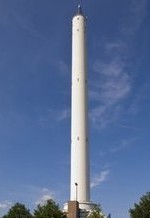
The European Space Agency (ESA) has announced the seventh edition of the Drop Your Thesis! programme. Through this programme, a team of university students will be given the opportunity to carry out their experiment in microgravity using the ZARM Drop Tower in Bremen, Germany. This facility with a height of 146 metres is one of the tallest […]
by UKSEDS
on 2nd September 2014
in Competition, Education, News, Opportunities
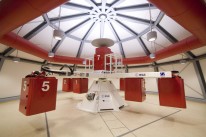
The European Space Agency (ESA) has announced the sixth edition of the Spin Your Thesis! programme. Through this programme, several teams of university students will be given the opportunity to carry out experiments in hypergravity using the Large Diameter Centrifuge (LDC) facility at ESA’s European Space Research and Technology Centre (ESTEC) in Noordwijk, the Netherlands. Spin […]
by UKSEDS
on 16th July 2014
in Ecliptic, Education, Events, Opportunities, Outreach, Press releases
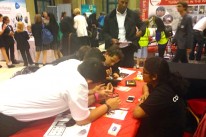
UKSEDS participated in the Big Bang Fairs and school festival. As a part of outreach programme, our stand for these events consists for space activities such as identifying meteorites from the earth rocks, display and description of our model rocket and telescope, space game called Space Invaders played using the keyboard interface created by SpaceGambit, […]
by UKSEDS
on 15th July 2014
in Conference, Education, Events, Opportunities, Outreach
UKSEDS volunteers are needed to help our friends ‘I4IS’ at Loncon3 run their exhibition ‘The Interstellar Space’ Your space expertise is needed to help I4IS deliver their message ‘Knowledge to the Stars’ to the 7,000 plus people at Worldcon – and I4IS experts will be there to back you up. As part of our Outreach activities, […]
by UKSEDS
on 5th May 2014
in Competition, Ecliptic, Education, Events, News, Opportunities
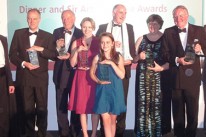
Do you know a student who has made for significant or outstanding achievements in space activities? Nominate them for a Sir Arthur Clarke Award! In recognition of notable or outstanding achievements in, or contributions to, all space activities, the Sir Arthur Clarke Awards have been presented annually since 2005. The Arthur C. Clarke Foundation is […]
by UKSEDS
on 6th April 2014
in Conference, Education, Events, News, Opportunities
The British Science Festival Student Bursary scheme, now in its 15th year, is open for registrations. The scheme enables institutions and companies to sponsor their chosen students (min. age 18) to attend the British Science Festival and experience the full week of events. With a programme of over 250 activities, lectures and workshops, the British Science […]
by UKSEDS
on 17th March 2014
in Ecliptic, Education, Events, Opportunities

UKSEDS is a firm supporter of space education as we are keen to encourage careers in the STEM industry and to motivate and stimulate self-belief in general. The International Space School Educational Trust (ISSET) are currently running programmes with that very function; to utilise space to inspire and motivate individuals to achieve their goals. Some of these […]